
Imagine you've recently lost your job and can't afford traditional SR22 insurance. You might think you're out of options, but there are alternatives worth considering. Non-owner liability insurance is one such option, providing coverage for borrowed vehicles without the high costs of an SR22. However, it's crucial to explore various choices and understand how they fit your unique situation. Let's examine these alternatives and find what might work best for you.
Key Takeaways
- Non-owner insurance policies provide liability coverage for those borrowing or renting vehicles without needing an SR22.
- Personal liability coverage can serve as a low-cost alternative to SR22 for non-owners.
- Some states offer affordable non-owner liability coverage, which may be sufficient for compliance.
- High-risk drivers can explore options like FR44 insurance as an alternative to SR22 requirements.
- Shopping around for competitive rates and discounts can help reduce costs while maintaining compliance without an SR22.
Non-Owner Insurance Policies
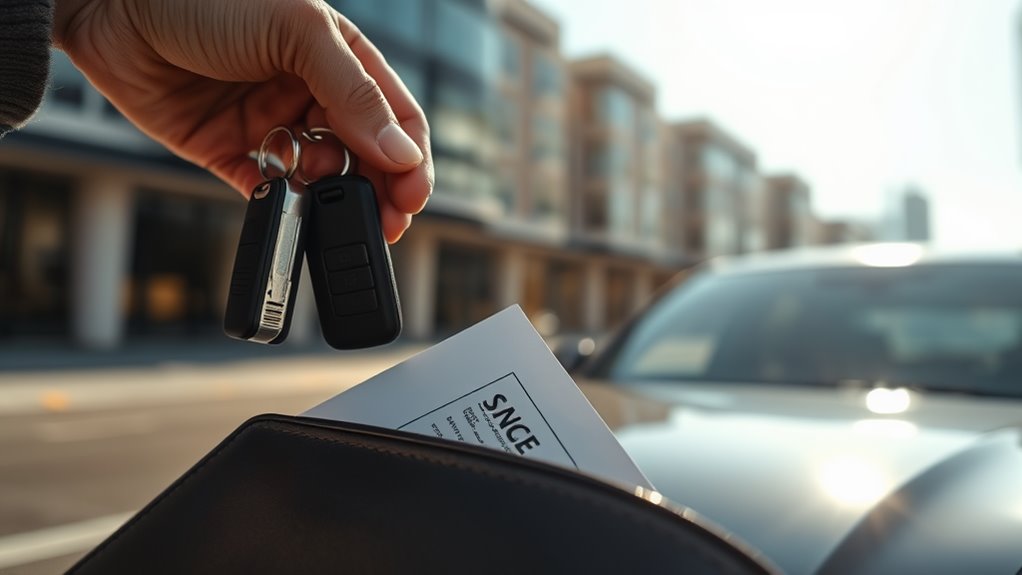
When you don't own a vehicle but still drive regularly, a non-owner insurance policy can be a smart choice to maintain liability coverage. This type of policy specifically provides liability for bodily injury and property damage while driving someone else's car. It's important to note that in Missouri, you may still need an SR-22 filing if your driving record requires it, even with a non-owner policy.
It's ideal for those who frequently rent or borrow vehicles, ensuring you avoid gaps in your insurance history. Non-owner insurance is typically more affordable than standard auto policies since it excludes extensive and collision coverage. Additionally, this policy is ideal for occasional drivers or those who rely on public transport, making it a flexible option for various driving needs.
It also acts as secondary coverage when needed, protecting you financially. Major insurers like Geico, Progressive, and Erie offer these policies, making it easy to find competitive rates tailored to your driving habits and location.
FR44 Insurance for High-Risk Drivers
Non-owner insurance policies provide a viable option for those who drive without owning a vehicle, but high-risk drivers may find themselves needing FR44 insurance due to serious offenses like DUIs.
FR44 acts as proof of financial responsibility, requiring higher liability limits than standard policies. In Florida, you'll need $100,000 for bodily injury liability, while Virginia mandates $60,000.
Because of these increased limits, expect your premiums to be higher, reflecting the added risk. It's important to shop around for affordable options and explore discounts to manage costs.
State-Specific Non-Owner Coverage Options
As you explore your options for non-owner insurance, it's important to understand that coverage varies greatly by state.
In Florida, non-owner insurance offers affordable liability coverage for residents who rent or borrow cars, with rates around $45 to $50 monthly.
Texas requires non-owner liability policies for high-risk drivers, providing vital coverage when driving borrowed vehicles, though it won't cover injuries to the driver.
In Illinois, non-owner SR22 insurance is key for showing financial responsibility without owning a car.
Meanwhile, California's Personal Mobility Insurance from State Farm covers liability and other costs when using rideshares or rentals.
Each state's unique requirements help maintain continuous coverage, which can lower future insurance premiums.
Low-Cost Non-Owner Car Insurance Solutions

Finding affordable non-owner car insurance solutions can be straightforward if you know what to look for. Here are three key strategies to help you save:
Discovering budget-friendly non-owner car insurance is easy with the right strategies to guide your search.
- Compare Quotes: Gather quotes from multiple insurers to identify the best rates for non-owner policies.
- Consider Discounts: Look for options like multi-policy discounts, safe driver incentives, or discounts for paying in full.
- Opt for Minimum Liability: If it aligns with state requirements, choose minimal liability coverage to lower your premiums.
Companies like State Farm, GEICO, and Erie Insurance often offer competitive rates.
Financial Responsibility Forms Beyond SR22
While SR-22 forms are common for demonstrating financial responsibility, they aren't the only options available to drivers facing high-risk situations. For instance, if you're in Florida or Virginia, you might encounter the FR-44 form, which mandates higher liability coverage. This stricter requirement is often necessary for severe offenses, such as high BAC DUIs.
Additionally, non-owner SR-22 policies provide a viable alternative for those without a vehicle, ensuring liability coverage when driving borrowed or rental cars. However, keep in mind that not all insurance companies offer SR-22 filings in every territory, and compliance with state laws is essential to avoid penalties.
Understanding these alternatives can better prepare you for steering your financial responsibility needs.
High-Risk Driver Insurance Providers
Steering through the landscape of high-risk driver insurance can be a challenging task, especially if you've faced infractions that impact your coverage options.
Several providers can help you navigate this terrain:
- USAA: Offers smaller rate hikes post-infraction, ideal for military families.
- State Farm: Competitive rates available nationwide, making it accessible for many.
- Kemper: Specializes in non-standard policies, boasting high customer satisfaction.
When considering high-risk insurance, remember key features like assigned risk policies and the impact of your credit score.
Comparing quotes and taking defensive driving courses can also help you secure better rates.
Legal and Compliance Aspects of Non-Owner Policies

Understanding the legal and compliance aspects of non-owner policies is essential for drivers who don't own a vehicle but still need insurance coverage.
These policies meet state minimum liability requirements and provide secondary coverage when driving non-owned vehicles, ensuring compliance with financial responsibility laws.
If you're a high-risk driver needing an SR22, a non-owner policy might be mandatory to reinstate your license.
It's crucial to recognize that while non-owner SR22 policies prove compliance, they won't cover damage to the vehicle you're driving.
Additionally, costs vary based on factors like driving history and location. Shopping around can help you find competitive rates, making it easier to maintain continuous coverage without gaps in your insurance history.
Conclusion
Maneuvering the world of non-owner insurance can feel like walking through a maze, but you're not alone. By exploring alternatives like non-owner liability insurance, FR44, and state-specific options, you can find a solution that fits your needs and budget. Remember to compare providers and consider all financial responsibility forms available. With the right approach, you'll have the protection you need without the burden of SR22, allowing you to drive with confidence and peace of mind.
